
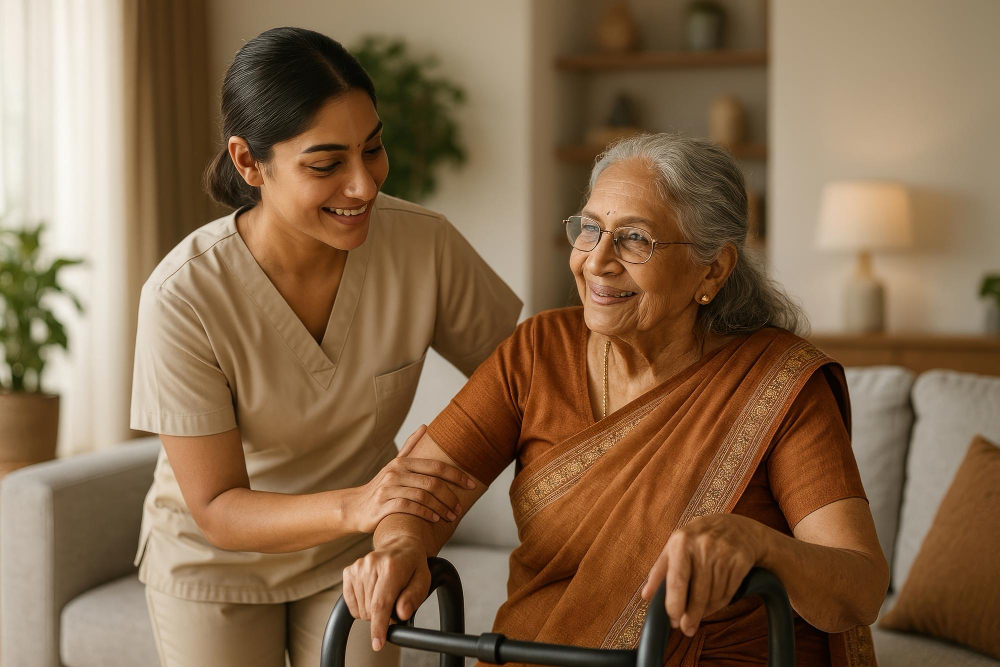
As India’s population ages, more seniors are still choosing to age in place, staying in the comfort of their own homes rather than moving to institutional care settings. This trend is not just emotional; it is deeply practical. Hence home-based geriatric care is emerging as a high-impact, scalable healthcare model- one that blends compassion, technology, and smart planning.
For healthcare entrepreneurs, hospital administrators, and families alike, this space represents both a social responsibility and a massive opportunity.
Why Aging at Home is Deeply Rooted in Indian Culture
In India, home is not just a place—it’s identity, routine, and emotional security.
Key India-Specific Drivers
- Emotional attachment to home & community
- Reluctance toward old-age homes (still culturally sensitive)
- Children living in other cities or abroad
- Rising chronic diseases like diabetes, hypertension, stroke
However, unlike Western countries, India lacks:
- Structured long-term care systems
- Insurance coverage for eldercare
- Standardized home healthcare services
This creates a massive gap—and a massive opportunity.
Why Aging at Home Matters
Aging at home offers something hospitals and facilities often cannot—familiarity, dignity, and emotional security. However, it comes with its own challenges:
- Increased risk of falls and injuries
- Chronic disease management (diabetes, hypertension, dementia)
- Medication adherence
- Social isolation and mental health concerns
Technology in Indian Eldercare: Adoption is Rising, But Needs Simplification
The good news? Today’s innovations in geriatric care are solving these problems effectively.
Technology is transforming eldercare, but in India, simplicity and affordability matter more than sophistication.
What Works in India

1. Smartphone-Based Health Monitoring
Most seniors may not use advanced wearables, but:
- Family WhatsApp groups
- Basic BP/glucometer readings
- Video consultations
These are already widely accepted and scalable.
2. Teleconsultation Platforms
There are start ups working on bridging access gaps:
- Specialist access from Tier 2/3 cities
- Reduced hospital visits
- Better chronic care follow-up
3. Voice & Vernacular Interfaces
Voice assistants in Hindi/regional languages can:
- Help seniors operate devices
- Reduce digital hesitation
India doesn’t need just high-end tech solutions, it also needs frugal, intuitive, vernacular solutions.
Indian Homes Need Indian Solutions: Safety Modifications That Work
Most Indian homes were not designed for aging.
High-Risk Areas in Indian Homes
- Wet bathroom floors
- Indian-style toilets
- Narrow staircases
- Poor lighting in older homes
Practical Modifications
- Install grab bars in bathrooms
- Use anti-skid mats/tiles
- Convert to Western-style toilets where possible
- Improve lighting (especially in corridors)
- Add bedside switches & emergency bells
Low-cost interventions = high impact in India
Home Healthcare Services in India: Growing But Fragmented
India’s home healthcare market is expanding rapidly but remains highly unorganised outside metros.
Key Service Categories
1. Attendant / Caregiver Services
- Daily assistance (bathing, feeding, mobility)
- Most in-demand in urban India
2. Skilled Nursing at Home
- Post-surgery care
- Injection, wound dressing
- ICU-like setups at home (emerging trend)
3. Home Diagnostics
- Sample collection for blood tests
- Chronic disease monitoring
4. Physiotherapy at Home
- Stroke rehabilitation
- Orthopedic recovery
Important Reality:
Trust and quality vary widely , Also standardisation is the next big need.
The Silent Crisis: Loneliness Among Indian Elderly
One of the most underestimated issues in India is social isolation.
Why It’s Growing
- Children migrating for work
- Loss of spouse
- Limited mobility
Solutions That Work in India
- Daily video calls with family
- Local Senior groups /park circless
- Companion caregivers
- Community-based NGOs
Important to note : Mental health is as critical as physical health in geriatric care.
Family Still Leads Eldercare in India, But Needs Support
Unlike Western systems, India’s eldercare is still family-driven.
Challenges Families Face
- Lack of time (working professionals)
- Lack of medical knowledge
- Emotional stress
What Smart Families Are Doing
- Hiring part-time caregivers
- Using teleconsultation
- Opting for preventive health packages
- Coordinating through WhatsApp groups
The future model is “family-led, professionally supported care.”
Business & Healthcare Opportunity in India
For healthcare consultants and providers, this is a high-growth, under-structured market.
Where the Opportunity Lies
1. Integrated Eldercare Model
- Home diagnostics + teleconsultation + pharmacy
- Subscription-based monthly plans
2. Chronic Disease Management Programs
- Diabetes care at home
- Cardiac monitoring programs
3. Geriatric Care Packages for NRI Families
- Monitoring parents in India
- Monthly reporting dashboards
4. Home Safety Audit Services
- One-time assessment + modification guidance
The Road Ahead: India’s Geriatric Care Revolution
India is not fully prepared—but that’s exactly why the opportunity is huge.
What Will Define the Future for Eldercare at Home in India
- Affordable home-based care models
- Tech-enabled monitoring (simple, not complex)
- Standardised caregiver training
- Preventive & subscription healthcare
Eldercare in India is not just a service—it’s a responsibility deeply rooted in culture.
But culture alone is no longer enough.
We need:
- Systems
- Technology
- Professional support
To ensure that India’s elderly don’t just live longer—but live better, safer, and with dignity—at home.
Chronic Stress and Aging: Understanding the Connection – thehealth24.com
9 Best Nutritional Supplements for Seniors to Know About – thehealth24.com
Comment on “Eldercare at Home in India: A Practical Guide to Geriatric Care for Indian Families & Healthcare Leaders”
Comments are closed.