
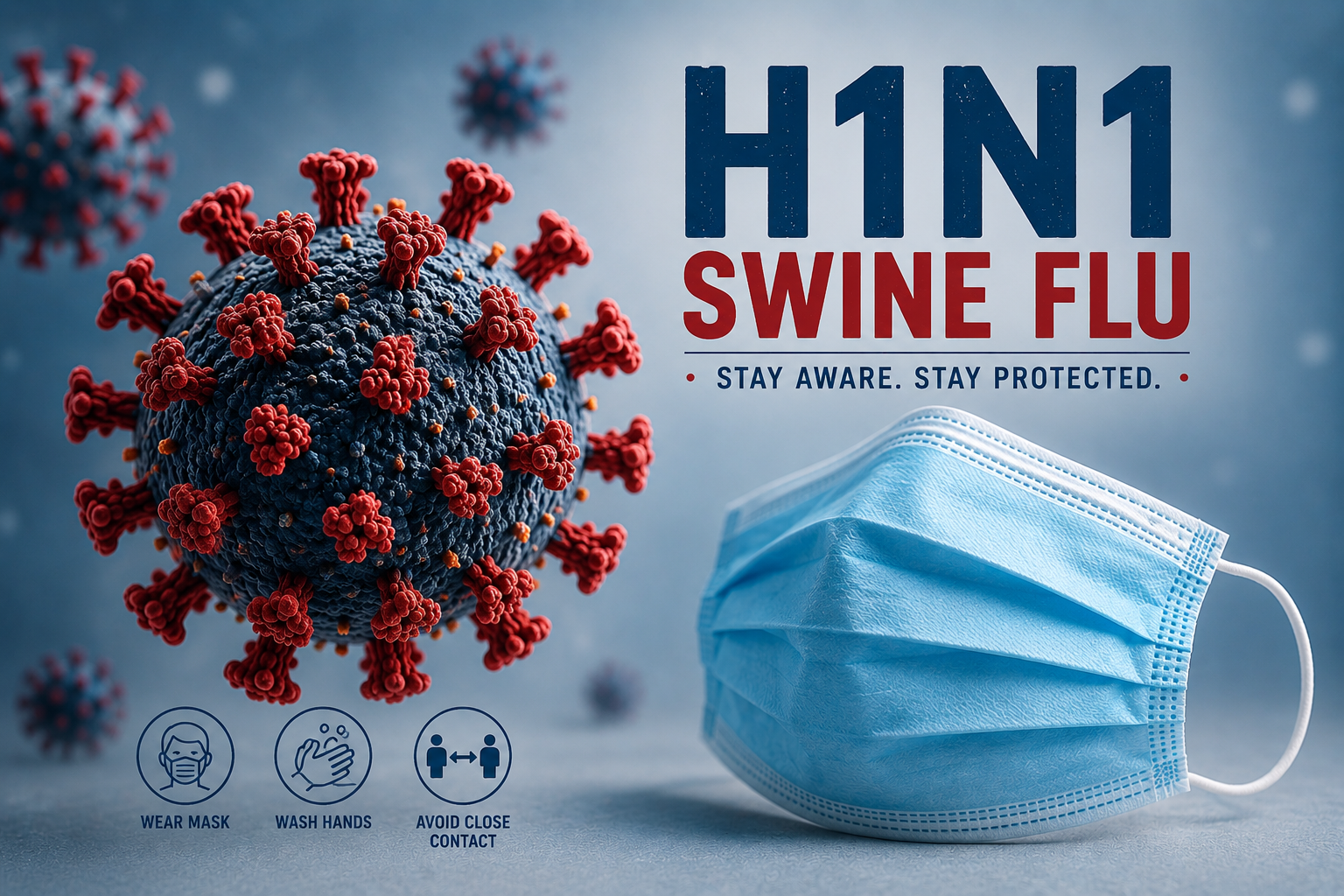
H1N1 cases are increasing in India. Is it just another seasonal flu or something you should take more seriously?
Fever, cough, sore throat and body aches are common during changing weather. Most people dismiss these symptoms as a “viral infection” and expect them to disappear in a few days.
But with H1N1 influenza, commonly known as swine flu, showing a significant rise in parts of India in August 2026, doctors and public health authorities are urging people to pay closer attention to respiratory symptoms, particularly among children, older adults, pregnant women and people with chronic health conditions.
Delhi alone has reported a sharp increase in H1N1 cases this year. Recent reports indicate that more than 1,700 H1N1 cases have been recorded in Delhi, making H1N1 the dominant influenza strain among reported Influenza-A infections. Cases and flu-like illnesses have also been attracting attention in other cities, including parts of Delhi-NCR and Bengaluru.
The important message is not to panic, but not to ignore the warning signs either.
What Is Swine Flu or H1N1?
Swine flu is the commonly used name for an infection caused by the Influenza A (H1N1) virus.
The term “swine flu” became widely known during the 2009 pandemic. Today, however, H1N1 is one of the influenza viruses that can circulate among humans as part of seasonal influenza activity.
Can H1N1 spread from person to person?
Yes.
H1N1 can spread through respiratory droplets and close contact when an infected person coughs, sneezes or talks. Like other respiratory viruses, transmission can be more likely in crowded settings and poorly ventilated indoor spaces.
This is why schools, offices, public transport, crowded events and households can become important settings for transmission.
Why Are H1N1 Cases Rising in India Recently?
The current increase is attracting attention because of a combination of factors.
- Changing and humid weather
Humid and fluctuating weather conditions can coincide with increased circulation of respiratory viruses. Doctors in Delhi-NCR have recently reported a rise in flu-like illnesses and H1N1 cases.
- People often mistake influenza for a “common viral fever”
This is one of the biggest problems.
The symptoms of H1N1 can overlap substantially with those of other respiratory infections. You cannot reliably identify H1N1 simply by looking at one or two symptoms. Doctors consider the severity and progression of illness, individual risk factors and, where appropriate, diagnostic testing.
- High-risk individuals can become seriously ill
While many people recover from influenza without serious complications, some groups are much more vulnerable to severe disease.
This makes early recognition especially important.
The state govt of Haryana on 24 August has directed health facilities to test 100% of patients with severe acute respiratory infection (SARI) for influenza and at least 5% of those reporting with influenza-like illness (ILI).
H1N1 Symptoms: What Should You Watch For?
The symptoms of H1N1 can be similar to those of seasonal influenza.
Common symptoms include:
- Fever
- Cough
- Sore throat
- Runny or blocked nose
- Headache
- Body aches and muscle pain
- Chills
- Extreme tiredness or fatigue
Some people may also experience:
- Nausea
- Vomiting
- Diarrhoea
Government and health authorities list fever, cough, sore throat and breathing difficulty among the important symptoms to watch for.
The Symptoms You Should Never Ignore
Seek medical attention promptly if a person with flu-like symptoms develops:
- Difficulty breathing or shortness of breath
- Chest pain or significant chest discomfort
- Persistent or worsening fever
- Unusual drowsiness, confusion or severe weakness
- Symptoms that improve but then return or suddenly worsen
- A noticeable fall in oxygen levels, particularly in vulnerable individuals
- Breathing difficulty and deterioration in a person’s overall condition should never be ignored.
Important Disclaimer: This article is for public education and does not replace medical advice. A doctor should assess severe, persistent or worsening symptoms.
Who Is Most at Risk of Serious H1N1 Infection?
Anyone can get influenza. However, certain people are more vulnerable to complications.
These include:
- Young children, particularly those under 5 years
- Adults aged 65 years and above
- Pregnant women
- People with chronic lung disease
- People with heart disease
- People with diabetes
- People with kidney or liver disease
- People with certain neurological disorders
- People with weakened immunity or serious underlying illnesses
India’s H1N1 guidance specifically identifies several of these groups as requiring greater medical attention because of their higher risk of complications.
If you belong to a high-risk group, do not wait for symptoms to become severe before speaking with a doctor.
How Does H1N1 Spread?
The virus mainly spreads through respiratory secretions.
For example, infection can spread when an infected person:
- Coughs
- Sneezes
- Talks at close range
Transmission may also occur through contaminated hands and surfaces followed by touching the eyes, nose or mouth.
The good news?
Many of the measures that protect you against H1N1 are simple and practical.
How to Prevent Swine Flu: 10 Simple Steps That Really Matter
- Wash your hands properly and frequently
Wash hands with soap and water, especially after coughing, sneezing, returning from public places or touching commonly used surfaces.
If soap and water are unavailable, use an appropriate hand sanitiser.
- Do not ignore respiratory hygiene
Cover your mouth and nose while coughing or sneezing.
Use a tissue when possible and dispose of it properly.
Avoid coughing or sneezing openly into your hands.
- Stay home when you are sick
This is perhaps one of the most important measures.
If you have fever and significant flu-like symptoms, going to work, school or crowded public places can expose many others.
Government guidance for mild influenza-like illness has emphasised avoiding unnecessary mixing with the public and high-risk family members while ill.
- Avoid close contact with vulnerable family members when you are ill
Be particularly careful around:
- Elderly parents or grandparents
- Young children
- Pregnant women
- People undergoing treatment for serious illnesses
- Individuals with weak immunity
- Improve ventilation
Crowded, poorly ventilated indoor environments can increase opportunities for respiratory virus transmission.
Where possible, improve airflow and ventilation in homes, offices and shared indoor spaces.
- Consider wearing a mask when appropriate
Mask use can be particularly useful when a person has respiratory symptoms or when advised in crowded settings and healthcare environments.
Follow local public health or healthcare advice regarding mask use.
- Do not self-medicate with antibiotics
This is extremely important.
H1N1 is caused by a virus. Antibiotics do not treat viral influenza.
Do not take antibiotics without medical advice. Inappropriate antibiotic use can contribute to antimicrobial resistance and may delay appropriate care.
- Ask your doctor about influenza vaccination
Influenza vaccines are an important preventive tool, particularly for people at higher risk of complications.
- Do not delay medical advice if you are in a high-risk group
A pregnant woman, elderly person or someone with diabetes or chronic lung disease should not simply assume that a worsening flu is “just seasonal”.
Early medical assessment can be important.
- Watch the trend not just the first symptom
A mild fever and cough may improve with time.
But if symptoms are worsening rather than improving, especially if breathing becomes difficult, seek medical attention.
The progression of the illness can be more important than trying to guess whether it is “ordinary flu” or H1N1 based on symptoms alone.
H1N1 or Common Flu: Can You Tell the Difference at Home?
Not reliably.
This is one of the biggest misconceptions.
Fever, cough, sore throat, body aches and fatigue can occur with several respiratory viral infections.
Doctors may consider:
- Your symptoms
- How severe they are
- How the illness is progressing
- Your age
- Existing health conditions
- Exposure history
- Whether you belong to a high-risk group
- Whether testing would affect management
So, instead of asking only:
“Is this swine flu?”
A more useful question may be:
“Am I getting better or getting worse?”
If symptoms are severe, persistent or worsening, particularly in a high-risk person, seek medical advice.
Do You Need an H1N1 Test for Every Fever and Cough?
Not necessarily. However the decision should be made by a qualified healthcare professional based on the clinical situation.
Do not demand a test simply because you have a cough—but do not ignore serious symptoms either.
Can H1N1 Be Treated?
Yes. Most people with uncomplicated influenza recover with appropriate rest, fluids and medical advice.
However, treatment decisions depend on:
- Severity of illness
- How long symptoms have been present
- Age
- Pregnancy
- Existing medical conditions
- Risk of complications
Antiviral medicines may be used in appropriate cases under medical supervision.
Do not start antiviral medicines or other prescription drugs without consulting a qualified doctor.
The Biggest Mistake People Are Making Right Now
The biggest mistake is probably extreme thinking.
Mistake No. 1: “It’s only a common cold. I’ll ignore it.”
Dangerous when symptoms are worsening or the person belongs to a high-risk group.
Mistake No. 2: “Every fever is swine flu.”
This creates unnecessary panic.
Many illnesses can cause fever and respiratory symptoms.
The right approach is in the middle:
Don’t panic. Don’t self-diagnose. Don’t ignore warning signs.
H1N1 in India: What the Recent Trend Means for You
The recent rise in reported H1N1 cases, including the sharp increase in Delhi, is a reminder that influenza remains a significant public health concern.
Delhi’s reported H1N1 burden has increased sharply compared with the same period last year, and recent reports put the city’s 2026 total at more than 1,700 cases. Health authorities are reviewing preparedness, while the NCDC continues to maintain technical guidance and public information on seasonal influenza.
But for the average family, the message is straightforward:
- Protect vulnerable family members.
- Practice respiratory and hand hygiene.
- Stay home when significantly ill.
- Do not misuse antibiotics.
- Seek timely medical advice when symptoms worsen.
Discuss influenza vaccination with your doctor, especially if you are at higher risk.
Frequently Asked Questions About Swine Flu
Is swine flu contagious?
Yes. H1N1 can spread from person to person through respiratory transmission.
Can a healthy person recover from H1N1?
Yes. Many people recover without serious complications, although the illness can be more severe in some individuals.
Are antibiotics useful for swine flu?
H1N1 is caused by a virus, so antibiotics may not treat the influenza virus itself. Antibiotics should only be taken when prescribed by a doctor for an appropriate reason.
Should I go to the hospital for every cough and fever?
Not necessarily. Mild symptoms can often be managed with appropriate medical guidance. However, high-risk individuals and anyone with severe or worsening symptoms should seek medical advice promptly.
Is H1N1 the same as every seasonal flu?
No. H1N1 is a specific subtype of Influenza A. However, its symptoms can overlap significantly with other influenza and respiratory viral infections.
Should children stay home from school if they have fever and flu-like symptoms?
If a child is unwell, keeping them home and seeking appropriate medical guidance can help their recovery and reduce the risk of spreading infection to others.
Which Diagnostic Tests Are Done for H1N1 Swine Flu?
H1N1 cannot be confirmed from symptoms alone. When testing is clinically indicated, Real-Time RT-PCR (Reverse Transcription Polymerase Chain Reaction) performed on a respiratory sample is the standard laboratory method used to detect influenza viruses and identify H1N1. Depending on laboratory protocol, the sample may be collected using a nasal swab, nasopharyngeal swab, throat swab or a combined respiratory swab, ideally early in the course of illness. Not every person with fever and cough requires an H1N1 test; the decision depends on the severity of symptoms, clinical assessment and whether the person belongs to a high-risk category.
In some situations, doctors may also advise additional tests, such as a complete blood count (CBC), chest X-ray or other investigations to assess complications or rule out other causes of respiratory illness. Testing and treatment decisions should always be guided by a qualified doctor.
Important Disclaimer:
This article is intended for health education and public awareness. It does not provide an individual diagnosis or replace consultation with a qualified healthcare professional. People with severe symptoms, breathing difficulty or worsening illness should seek doctor’s advice & prompt medical care.
For More Information & official updates Read Here
If you found this article useful, please share it with your family, friends, parents’ groups and workplace networks. One informed person can help prevent the spread of infection.