A healthcare system becomes stronger when it stops waiting for patients to become seriously ill and starts helping them stay healthy.
A man walks into a hospital because he has been experiencing occasional headaches. He expects to receive pain medication and return to work.
Instead, the nurse checks his blood pressure. It is significantly elevated.
He is surprised. “I don’t have hypertension,” he says. “I feel fine.”
That sentence captures one of the greatest challenges facing modern healthcare.
Many people associate illness with symptoms. If they can work, eat, sleep, travel, and carry on with their daily routines, they assume everything is fine.
But hypertension does not always provide that warning.
The World Health Organization estimates that about 1.28 billion adults aged 30–79 years worldwide have hypertension, with a significant proportion unaware that they have it. Hypertension is also a major risk factor for cardiovascular disease, stroke, and kidney disease.
The numbers are alarming.
But behind the numbers lies an opportunity—not only for public health, but for healthcare organisations seeking sustainable growth.
The question is no longer simply:
How can healthcare organisations treat more people with hypertension?
A more strategic question is:
How can healthcare organisations help more people discover, prevent, manage, and control hypertension before complications occur?
That is where healthcare business growth and health impact can meet.
Hypertension Is a Business Challenge Hiding Inside a Public Health Problem
Healthcare business growth is sometimes viewed primarily through the lens of revenue, patient numbers, new facilities, or advanced technology.
These are important.
But sustainable growth begins with identifying real health needs and developing services that address them effectively.
Hypertension represents one of those needs.
Consider a typical community.
- Many adults may not know their blood pressure.
- Some may have been diagnosed but struggle to maintain control.
- Others may take medication only when they experience symptoms.
- Some may stop treatment once they begin feeling better.
- Others may never return for follow-up because they believe the condition is no longer serious.
For healthcare organisations, this creates a significant gap between diagnosis and long-term management.
Closing that gap can improve health outcomes while creating opportunities for better service delivery.
The Hidden Opportunity in Early Detection
A blood pressure check can take only a few minutes.
Yet that simple interaction can open the door to an entire continuum of healthcare.
A person discovered to have elevated blood pressure may need:
- Confirmatory assessment
- Lifestyle counselling
- Laboratory investigations
- Medication when clinically indicated
- Nutrition support
- Regular monitoring
- Follow-up consultations
- Patient education
- Cardiovascular risk assessment
This does not mean healthcare organisations should view patients as revenue opportunities.
Quite the opposite.
It means healthcare organizations can create sustainable value by solving meaningful health problems comprehensively and responsibly.
The strongest healthcare businesses are often those that identify unmet needs and build systems around improving outcomes.
Prevention Can Become a Growth Strategy
Imagine a diagnostic centre that offers blood pressure screening as part of a community health campaign.
A person discovers that their blood pressure requires further assessment.
The organization provides appropriate guidance and refers the individual to a physician.
The patient receives evaluation, begins appropriate management, and returns for monitoring.
Over time, the relationship may expand into other preventive services—blood glucose testing, cholesterol assessment, cardiovascular risk evaluation, health education, and routine screening.
The organization has not grown by selling unnecessary services. It has grown by creating a pathway around a genuine health need.
That distinction matters.
Healthcare business growth should never depend on creating fear or encouraging unnecessary medical consumption.
It should depend on delivering value.
The Patient Journey Does Not End With Diagnosis
One of the biggest mistakes healthcare organizations can make is treating diagnosis as the finish line.
For hypertension, diagnosis is often the beginning.
A patient may receive medication but struggle with adherence.
They may understand their diagnosis but not know what foods to reduce.
They may want to exercise but work long hours.
They may miss follow-up appointments because of transportation difficulties.
They may stop medication because they feel normal.
These are not simply patient problems.
They are opportunities for healthcare organizations to redesign care around real-life behaviour.
Could patients receive clearer educational materials?
Could appointment reminders improve follow-up?
Could telemedicine reduce unnecessary travel?
Could community outreach bring screening closer to where people live?
Could pharmacists, nurses, nutritionists, and other healthcare professionals be integrated more effectively into hypertension management?
These questions move the conversation from treating disease to designing better healthcare systems.
Patient Engagement Is Part of the Business Model
A prescription does not automatically create adherence.
A diagnosis does not automatically create understanding.
A consultation does not automatically create behavioural change.
Patients need to be engaged.
Consider two patients diagnosed with hypertension.
Patient A receives a prescription and leaves the clinic.
Patient B receives the prescription but also receives clear information about the condition, understands how and when to take the medication, knows when to return, has an opportunity to ask questions, and receives appropriate follow-up.
The clinical encounter may have lasted only a few minutes longer.
But the long-term relationship can be dramatically different.
Patient engagement improves continuity.
Continuity strengthens trust.
Trust encourages patients to remain connected to appropriate healthcare.
And strong patient relationships are fundamental to sustainable healthcare organizations.
Community Outreach Can Strengthen Both Health and Growth
Hypertension does not exist only inside hospitals.
It exists in offices, markets, schools, homes, factories, churches, universities, and communities.
That means healthcare organizations have opportunities to take preventive services beyond traditional clinical settings.
Consider a hospital organizing a blood pressure screening campaign in a workplace.
Or a diagnostic centre partnering with a community organization for a health awareness event.
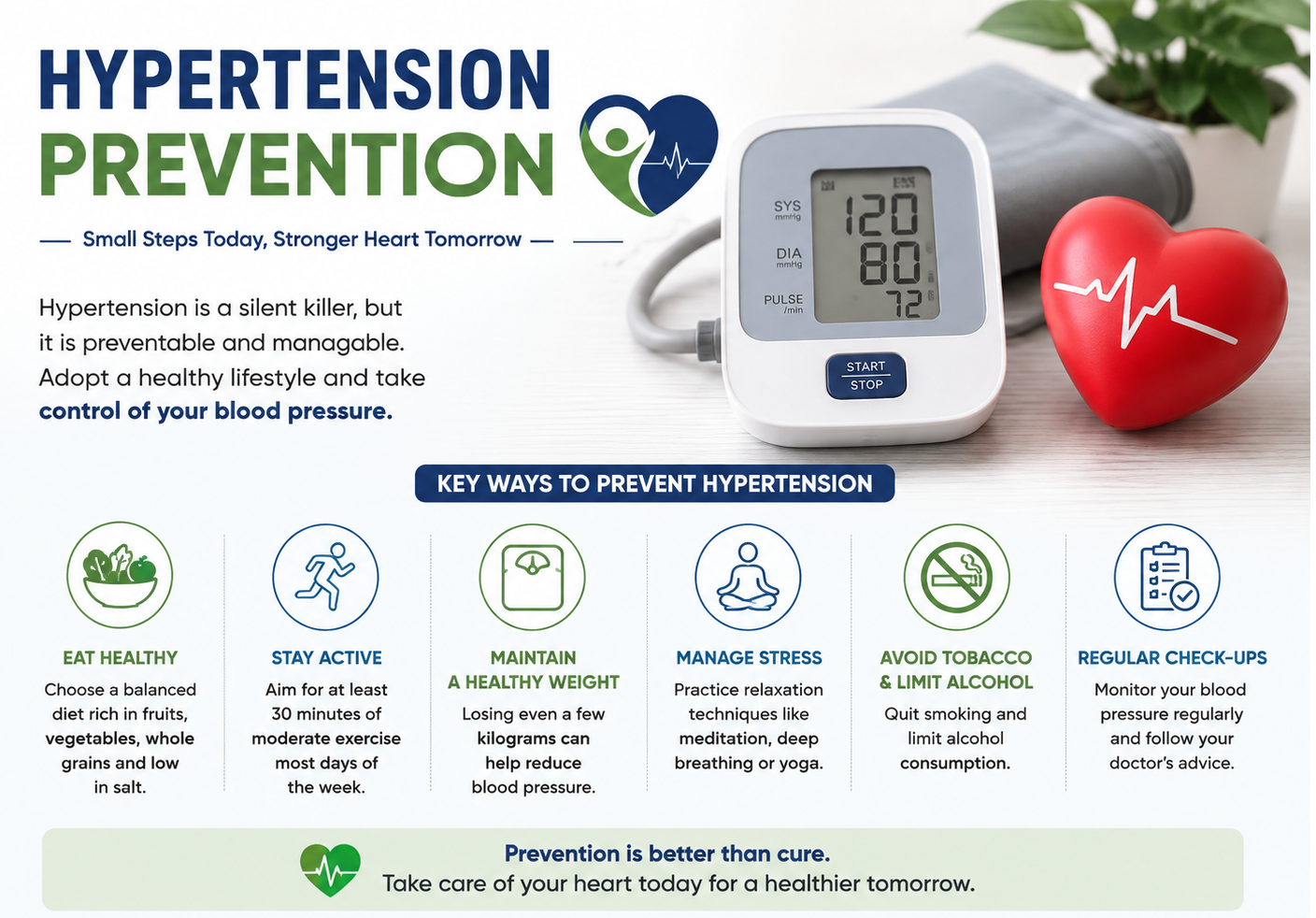
Or healthcare professionals conducting educational sessions about salt intake, physical activity, medication adherence, and routine screening.
These activities can create health awareness while introducing healthcare organizations to communities that may not otherwise interact with them.
But the purpose should remain clear:
Serve first. Growth follows value.
When communities experience useful, ethical, and accessible healthcare services, relationships can develop naturally.
Digital Healthcare Can Extend Hypertension Management
Hypertension management does not always require patients to physically enter a hospital for every interaction.
Digital tools can support continuity of care when appropriately designed.
Appointment reminders can reduce missed visits.
Teleconsultations can improve access for suitable patients.
Digital records can support continuity between healthcare professionals.
Remote monitoring can help selected patients track blood pressure at home under appropriate clinical guidance.
Health education content can remind patients that hypertension management involves more than taking medication.
These technologies create opportunities for healthcare organizations to remain connected with patients between visits.
However, digital transformation should not become technology for technology’s sake.
The key question should always be:
Does this technology make healthcare more accessible, coordinated, safe, or patient-centred?
If the answer is yes, it can become a powerful component of healthcare growth.
From One Service to a Healthcare Ecosystem
Hypertension also demonstrates why healthcare organizations should think beyond individual services.
A patient may initially enter an organization through a simple blood pressure screening.
That interaction could lead to a physician consultation.
The patient may require laboratory testing.
They may need nutrition counselling.
They may return for monitoring.
They may eventually require cardiovascular assessment.
The organization therefore moves from providing a single service to creating a connected healthcare journey.
This is where strategic healthcare management becomes important.
Organizations need to understand:
- What health problems are common in their target communities?
- Where are patients dropping out of care?
- Which services are underutilized?
- How long do patients wait?
- Are follow-up systems effective?
- Are patients satisfied with communication?
- Which preventive services could be integrated?
- How can data support better decision-making?
These questions connect clinical care with business strategy.
The hypertension challenge illustrates a broader principle in healthcare consulting: growth should be built around solving meaningful healthcare problems, not simply increasing activity.
Healthcare organisations need more than clinical expertise to thrive in a changing healthcare environment. They also need strategic thinking around service development, patient experience, operational efficiency, digital presence, market opportunities, and sustainable growth.
Hypertension provides a practical example.
An organisation that understands the burden of hypertension in its target population can potentially develop a more coordinated approach involving screening, diagnostics, physician consultation, patient education, follow-up, community outreach, and digital engagement.
The objective is to build a healthcare model that creates measurable value for patients while strengthening organizational sustainability.
That distinction is critical.
When strategy is aligned with genuine patient needs, they can reinforce each other.
Measuring More Than Revenue
If a healthcare organization launches a hypertension programme, success should not be measured only by the number of consultations generated.
A more meaningful dashboard could ask:
How many people were screened?
How many previously undiagnosed cases were identified and appropriately referred?
How many patients returned for follow-up?
Did treatment adherence improve?
Did blood pressure control improve among participating patients?
Did patients report better understanding of their condition?
Did the organization reduce missed appointments?
Did community awareness increase?
These measures connect business performance with health impact.
And that is the direction healthcare business growth should take.
The Future Belongs to Preventive Healthcare
Healthcare organizations that wait until patients become seriously ill will always have a role to play.
But organizations that help people remain healthy before complications occur can create an even greater long-term impact.
Hypertension offers a clear lesson.
A blood pressure machine may seem like a simple piece of equipment.
A five-minute screening may seem insignificant.
A follow-up reminder may appear routine.
A health education session may attract only a small audience.
Yet these small interventions can become part of a larger healthcare system designed around prevention, early detection, engagement, and continuity.
The opportunity is not merely to treat more hypertension.
It is to build healthcare models that make hypertension easier to detect, understand, manage, and prevent.
Looking Ahead
The future of healthcare business growth will not belong solely to organizations with the largest buildings, newest equipment, or most aggressive marketing.
It will belong to organizations that understand the problems their communities face and develop meaningful solutions around them.
Hypertension is one of those problems.
It is silent, widespread, preventable in many cases, and capable of producing devastating complications when poorly controlled.
But it also presents an opportunity to rethink what healthcare growth should mean.
Growth should mean more than more patients.
It should mean more people reached before complications occur.
More patients educated.
More conditions detected early.
More individuals supported throughout their care journey.
More communities connected to preventive services.
And ultimately, more people living healthier lives.
That is the kind of growth healthcare should pursue.
Because the most successful healthcare organization may not be the one that treats the most complications.
It may be the one that helps the greatest number of people avoid them.
Frequently Asked Questions
- Why is hypertension relevant to healthcare business growth?
Hypertension is a widespread chronic health challenge requiring screening, diagnosis, treatment, monitoring, education, and long-term follow-up. Healthcare organizations can create sustainable value by developing integrated services that address these needs responsibly.
- How can healthcare organizations make hypertension prevention part of their growth strategy?
Organizations can integrate blood pressure screening, community outreach, patient education, preventive health packages, follow-up systems, digital engagement, and appropriate referral pathways into their services.
- Does healthcare business growth mean increasing the number of patients?
Not necessarily. Sustainable growth can also involve improving patient retention, strengthening outcomes, increasing service efficiency, expanding access, developing valuable services, and building stronger relationships with communities.
- Why is patient engagement important in hypertension management?
Hypertension often requires long-term lifestyle changes, medication adherence, regular monitoring, and follow-up. Patients who understand and participate actively in their care are better positioned to manage their condition effectively.
- Can technology improve hypertension management?
Yes. Depending on the clinical context, telemedicine, digital reminders, electronic records, remote monitoring, and digital health education can support continuity and engagement. Technology should complement—not replace—professional healthcare.
- What role can community outreach play?
Community outreach can bring screening and health education closer to people, increase awareness, identify individuals who may need further assessment, and strengthen relationships between healthcare organizations and the communities they serve.